 SeaMemo
Mayday, Pan Pan and Sécurité: what the calls mean and how to make a Mayday call
Mayday is the international distress signal on the radio. It comes from the French m'aider, short for “venez m'aider”, come and help me. You only call Mayday when a boat or a person is in grave and imminent danger and needs help right now, such as fire, flooding or man overboard, and you always say it three times: “Mayday, Mayday, Mayday”. One level below sits Pan Pan for urgent situations without immediate danger to life, and below that Sécurité for safety messages. At sea you first send the digital distress alert (DSC) and then speak the distress message on VHF channel 16.
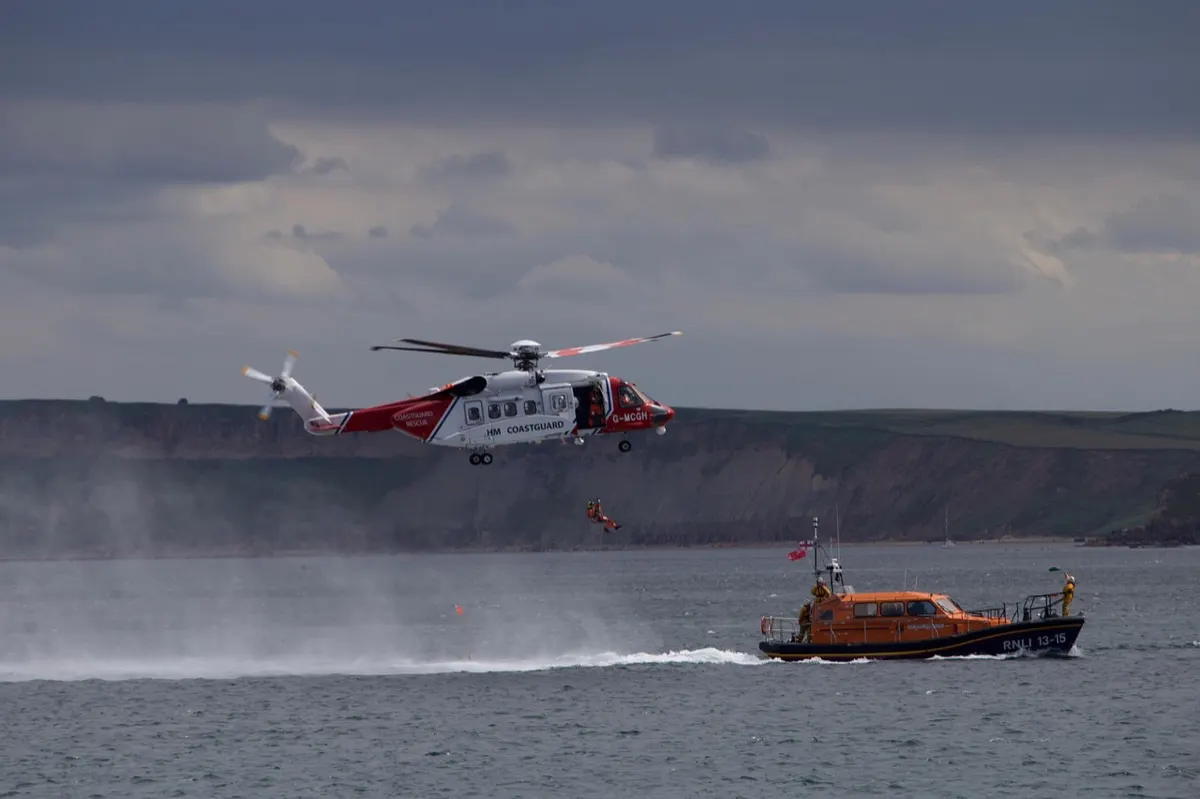
Mayday, Pan Pan and Sécurité at a glance
Marine radio has three priority levels, and all three words come from French. The highest one always wins: while a Mayday is running, everyone else keeps quiet.
| Signal | Origin | When | Examples |
|---|---|---|---|
| Mayday distress | m'aider, help me | Grave and imminent danger, immediate help needed | Fire, boat sinking, man overboard |
| Pan Pan urgency | panne, breakdown | Urgent, but no immediate danger to life | Engine failure, damage to the boat, someone ill but not in a life threatening state |
| Sécurité safety | sécurité, safety | Important information for the safety of others | Gale warning, drifting container, yacht unable to manoeuvre near a shipping lane |
Each word is spoken three times in a row. The working language on marine radio is English, so a Croatian or Greek coast station will understand “This is” wherever you come from.
Where the word Mayday comes from
The call was invented by Frederick Stanley Mockford, the senior radio officer at Croydon Airport near London. In the early 1920s he was asked to find a word that every pilot and ground crew would understand at once in an emergency. Since much of the traffic ran between Croydon and Le Bourget near Paris, he suggested “Mayday”, the English spelling of how the French m'aider sounds. It was introduced for cross Channel flights in February 1923. The International Radiotelegraph Convention of Washington made Mayday the worldwide spoken distress call in 1927, the voice counterpart of SOS in Morse code.
So Mayday has nothing to do with May Day, the first of May. Pan Pan comes from the French “panne”, a breakdown, and Sécurité simply means safety.
How to make a Mayday call, step by step
The steps follow the guidance of the UK Maritime and Coastguard Agency for small boats. A Mayday has three parts: the digital distress alert, the distress call and the distress message.
- Send the DSC distress alert. Lift the cover over the red “Distress” button, press and hold it until the radio shows that the alert has been sent. The alert goes out on channel 70 to every station in range. It only contains your position if the radio has a built in GPS or is connected to one.
- Go to channel 16. When a coast station acknowledges, or after about 15 seconds, speak on channel 16 on high power.
- Make the distress call. “Mayday, Mayday, Mayday. This is”, then your boat name three times, your call sign and your MMSI.
- Give the distress message. “Mayday” once more, boat name, call sign and MMSI, then position, nature of distress, assistance required, number of persons on board, any other information and finally “Over”.
- Listen. Release the button and wait for an answer. If none comes, repeat the message.
“Mayday, Mayday, Mayday. This is sailing yacht Mila, Mila, Mila, call sign …, MMSI …
Mayday, sailing yacht Mila, call sign …, MMSI …
Position four three degrees three zero decimal five minutes North, zero one six degrees two five decimal zero minutes East.
Fire in the engine room. Require immediate assistance. Four persons on board. Preparing to abandon to the liferaft. Over.”An example. Your boat's call sign and MMSI are in the radio papers and often on a sticker on the set. Numbers are spoken digit by digit.
The position is the most important part. Give it as latitude and longitude, as the plotter or the radio shows it. If you are not sure of it, a bearing and distance from a known light or headland helps, for example “two miles south of …”. How to say letters and digits on the radio is covered in the guide to the NATO phonetic alphabet.
The distress message as a checklist
- MAYDAY
- Boat name, call sign, MMSI
- Position
- Nature of distress
- Assistance required
- Persons on board
- Other information, for example “abandoning to liferaft”
- OVER
You hear a Mayday: what now?
When a DSC radio receives a distress alert it sounds a loud alarm. Then:
- Stop transmitting on anything that could interfere with the distress traffic and keep listening on channel 16.
- Write it down: boat name, position, nature of distress, persons on board and the time. It belongs in the logbook.
- Do not answer too soon. A coast station should acknowledge first. If there is no acknowledgement after about five minutes and you can help, acknowledge by voice: “Mayday, (name of the boat in distress), this is (your boat name three times), received Mayday”, then say what help you can give and your estimated time of arrival, and end with “Over”.
- Pass it on: if the call has not reached a coast station, relay it by any means you have. This is called a Mayday Relay.
The rescue centre can impose radio silence: “Seelonce Mayday” means only the distress traffic may use the channel. Only after “Seelonce feenee” is the channel free again.
Pan Pan: the urgency call
Pan Pan fits when it is serious but nobody is in immediate danger: engine failure, a broken rudder, a dismasting, a crew member who is ill but not in danger of life. The red button stays closed. Send a DSC All Ships Urgency call from the radio's menu and name a working channel. Then on channel 16:
“Pan Pan, Pan Pan, Pan Pan. All stations, all stations, all stations. This is sailing yacht Mila, Mila, Mila, call sign …, MMSI …. Please go to channel … . Out.”Then switch to the working channel you named and give the actual message there: position, what has happened, what help you need or what you intend to do.
If an urgency situation turns into real distress, for example a disabled boat drifting onto rocks, upgrade to Mayday. The suffix “Pan Pan Medico” for medical cases still appears in older books but is no longer in official use.
Sécurité: the safety call
“Sécurité, Sécurité, Sécurité” mostly comes from coast stations announcing a gale warning, a weather forecast or a navigation warning. The message itself follows on a working channel. What those warnings contain is explained in the guide to the marine weather forecast. A yacht may send Sécurité too when others need a warning, for example because it is drifting without wind or engine near a shipping lane.
False alarm: how to cancel a DSC distress alert
The red button is easy to press by accident, especially on an unfamiliar charter boat. The US Coast Guard states plainly that you will not get into trouble for an accidental alert if you cancel it immediately.
- Do not switch the radio off. Otherwise most radios carry on sending the alert once they are powered up again.
- Cancel the alert in the menu. Every DSC radio has an option for it, usually “Cancel distress”.
- Announce it on channel 16: tell all stations that the alert was a mistake, with your boat name, MMSI and the time of the alert.
Other distress signals at sea
The spoken Mayday is only one of several distress signals. Annex IV of the International Regulations for Preventing Collisions at Sea (COLREGs) lists these among others:
- red parachute rockets or red hand flares
- orange smoke
- slowly and repeatedly raising and lowering arms outstretched to each side
- SOS in Morse code by light or sound
- the signal flags N over C from the flag alphabet
- a continuous sound on the fog horn
- flames on the vessel
- the DSC distress alert, an EPIRB and the liferaft's radar transponder
These signals are reserved for real distress. Using them for anything else, or showing signals that could be confused with them, is prohibited. The list sits in the same rules as the COLREGs right of way rules.
Coastguard emergency numbers
At sea channel 16 comes first: the rescue centre and every vessel nearby hear you at once, while a phone reaches only one person. Without a radio, or as a witness on shore, you reach the rescue services like this:
| Country | Phone | Note |
|---|---|---|
| United Kingdom | 999 | ask for the Coastguard |
| United States | VHF channel 16 | call the Coast Guard on channel 16; it acknowledges DSC alerts within VHF range |
| Croatia | 195 | MRCC Rijeka, free from landline and mobile |
| Italy | 1530 | Guardia Costiera, from landline and mobile |
| Greece | 108 | Hellenic Coast Guard |
| France | 196 | CROSS, from the shore, free and around the clock |
| Spain | 900 202 202 | Salvamento Marítimo |
| Germany | +49 421 536 87 0 | MRCC Bremen of the DGzRS, around the clock; on the radio “Bremen Rescue” |
| EU | 112 | European emergency number, ask to be put through to the maritime rescue centre |

A Mayday card next to the radio
Under stress the right words do not come. The RYA therefore recommends a Mayday card next to the radio with the boat name, call sign and MMSI already filled in. On a charter boat ask for these details during the charter boat handover and check that the radio has a GPS position. The safety briefing for the crew on day one should cover:
- where the radio is, how to switch it on and select channel 16
- where the red distress button is and when to press it
- where the Mayday card hangs and where to read the position
- where the life jackets, flares and liferaft are stowed
Handling the radio properly is taught on a VHF radio course such as the SRC. More on that in the guide to the boat license.
Common mistakes
- Mayday where Pan Pan will do. An empty tank off a clear coast is not imminent danger. A Mayday ties up rescue crews who may be needed elsewhere.
- Forgetting the position. Without it nobody knows where to search. It comes right after the boat name.
- Talking too fast. Calm and clear, numbers digit by digit, so everything gets through the first time.
- Keeping the transmit button pressed. While you transmit you cannot hear an answer.
- Switching off after a false alert. Cancel it, do not power down.
- Relying on a phone. Coverage at sea is patchy, and no vessel nearby hears a phone call.
Emergency know-how in your pocket, the trip in your logbook
SeaMemo is your logbook for sailing trips: GPS tracking records route, sea miles and duration of every leg, offline too. The guidance for Mayday, man overboard and fire on board is in the app without needing a signal. You plan the safety briefing as a shared checklist with the crew, and anything that happened on the radio goes into an entry for that leg. What else belongs in it is covered in the guide on how to keep a logbook.


If you are working on emergency procedures, the basics of buoys and sea marks and anchoring belong on the list too.
Sources
- Maritime and Coastguard Agency: GMDSS VHF DSC procedures for small boat users: distress alert, distress call and message, acknowledgement by other vessels, Pan Pan
- RYA: Mayday and pan pan calls: when to use Mayday or Pan Pan, Mayday card by the radio
- US Coast Guard Navigation Center: DSC Distress: position in the alert, channel 16, cancelling an inadvertent alert
- US Coast Guard Navigation Center: Annex IV, International Distress Signals
- Maritime and Coastguard Agency: call 999 and ask for the Coastguard
- gov.hr: 195, maritime search and rescue (Croatian)
- Italian Ministry of Infrastructure and Transport: 1530, Emergenza in mare (Italian)
- French Ministry of the Sea: Comment alerter les secours en mer ? (French)
- Salvamento Marítimo (Spanish)
- DGzRS: emergency contacts (German): MRCC Bremen, channels 16 and 70
- Wikipedia: Mayday: origin, Mockford 1923, Washington 1927, Seelonce
- Wikipedia: Pan-pan and Sécurité
Get SeaMemo for free
Logbook, travel journal and crew in one app. For iPhone and Android, works offline at sea.


Frequently asked questions
What does Mayday mean?
Mayday is the international radio distress signal for grave and imminent danger that needs immediate help. The word comes from the French m'aider, short for venez m'aider, come and help me. It is always spoken three times in a row.
What is the difference between Pan Pan and Mayday?
Mayday is for danger to life that needs help at once, for example fire, sinking or man overboard. Pan Pan is the urgency call one level below: engine failure, damage to the boat or someone ill on board, but no immediate danger to the boat or the people on it.
What does Sécurité mean on the radio?
Sécurité announces a safety message, usually a weather or navigation warning from a coast station. A yacht can send one too, for example when it is drifting without steerage near a shipping lane.
Which channel do you use for a Mayday call?
VHF channel 16. It is the international distress, safety and calling channel, and coastguards and nearby vessels keep watch on it. The digital DSC distress alert goes out automatically on channel 70.
What should I do if I sent a DSC distress alert by mistake?
Do not switch the radio off. Cancel the alert in the radio's menu, then tell all stations on channel 16 that it was a false alert, with your boat name, MMSI and the time of the alert.
Can I call for help with a phone instead?
As an addition, yes. In the UK call 999 and ask for the Coastguard. In Croatia the number is 195, in Italy 1530, in Greece 108, in Spain 900 202 202, in France 196 from the shore, and 112 works across the EU. A phone does not replace channel 16, though: on the radio every vessel nearby hears you.