 SeaMemo
Types of life jackets for sailing: which one you need and how to check it
On a sailing yacht you wear a life jacket rated at least 150 newtons (ISO 12402-3), usually an automatic inflatable that fills itself when you hit the water. Unlike a buoyancy aid, it turns you face up even if you are unconscious, keeping your mouth and nose clear. With heavy foul weather gear or in extreme offshore conditions, a 275N jacket is the safer choice. Add crotch straps, a light and a harness so you can clip on at sea. And before every trip, a quick check: cylinder tight, indicators green, expiry dates in date.
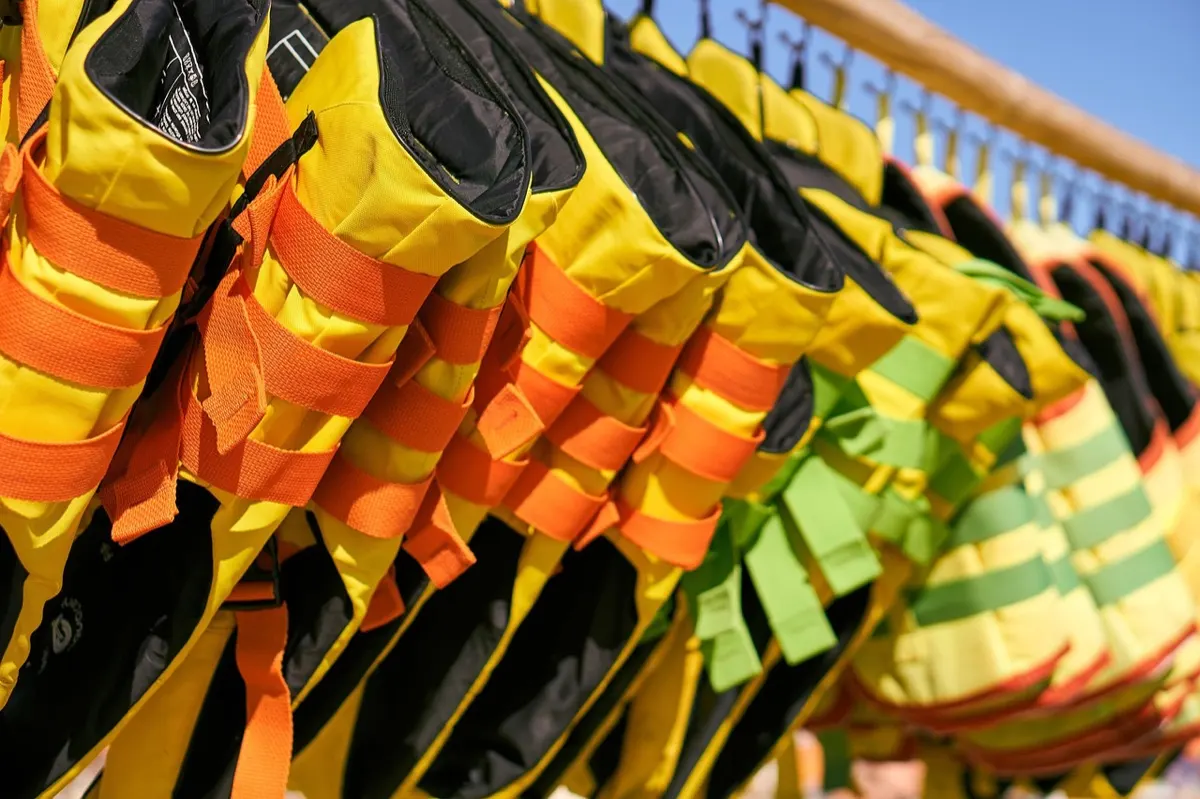
Buoyancy aid or life jacket: the difference
People often call anything orange that floats a life jacket. For safety on board, the difference matters:
- Buoyancy aid: a foam vest, typically 50 newtons. It helps you float while you tread water or swim and gives you plenty of freedom to move, but it will not turn you face up if you are unconscious. It is meant for dinghies, windsurfing and kayaking, where you expect to go in and can rescue yourself.
- Life jacket: designed to turn an unconscious person face up and keep the mouth and nose out of the water. It is meant for sailing yachts and motor cruisers, where you do not intend to enter the water. From 150 newtons it is usually inflatable and lies flat around your neck until it fires.
On a cruising yacht, everyone on board therefore gets a life jacket. The buoyancy aid belongs in the dinghy.
Buoyancy levels under ISO 12402
The number on the jacket is its minimum buoyancy in newtons. In the UK and Europe, new life jackets must meet ISO 12402. Older ones may carry the earlier standards EN 393 to 399. US Coast Guard approved jackets now use the same idea of performance levels next to the older Type I to V labels.
| Level | Standard | Typical use | Key points |
|---|---|---|---|
| 50N | ISO 12402-5 (EN 393) | close to shore, for confident swimmers who can rescue themselves | foam, good freedom of movement, will not turn an unconscious person face up |
| 100N | ISO 12402-4 (EN 395) | sheltered or calm water where rescue is likely to be quick | usually foam with a large collar, not for rough conditions |
| 150N | ISO 12402-3 (EN 396) | coastal and offshore | usually inflatable, designed to turn an unconscious wearer face up |
| 275N | ISO 12402-2 (EN 399) | extreme offshore conditions, heavy clothing | usually inflatable, highest buoyancy, bulky when inflated |
For most coastal and offshore sailing, 150N is the standard choice. One limit is easy to overlook: foul weather gear and other air trapping clothing hold air in the water, often around the shoulders and hips. That buoyancy works against the jacket and can stop it turning you face up. If you sail in heavy gear, in winter or far offshore, choose 275N. The trade off: inflated, it is bulky and restricts movement.
Automatic or manual: how inflatables fire
An inflatable life jacket has a bladder and a CO2 cylinder. The firing system decides how the gas gets in:
- Manual: you pull the cord and a firing pin pierces the cylinder. If you are unconscious, nothing happens.
- Automatic, water activated: the firing head reacts to water and inflates the jacket without any action from you.
- Automatic, hydrostatic: the firing head reacts to water pressure once the jacket is submerged.
Every inflatable also has an oral inflation tube to top up the air or as a backup. Inflatables are comfortable and barely get in the way while sailing. They only work when cylinder and firing head are in order, which is why the check further down matters.
What to look for when you buy one
- At least 150 newtons and certification to ISO 12402-3 or EN 396 (or USCG approval in the US).
- Crotch straps: they stop the jacket riding up over your head in the water.
- Whistle and retroreflective tape: the tape reflects a searchlight beam back to its source.
- Light: at night a flashing light is far easier to spot than reflective tape. Many jackets have one, others have attachment points.
- Spray hood: protects your face and airway from spray.
- D ring or integrated harness: a strong point to clip your tether to.
- Beacon: if you want to carry a personal locator beacon or AIS MOB device inside the jacket, check with the manufacturer that it will not interfere with inflation.
How to fit a life jacket
A loose jacket rides up in the water and will not hold your head clear. To get the fit right:
- Wear the jacket over your clothing, not under it.
- Check that the straps are free of twists before you close the clips.
- Tighten the waist strap until the jacket is snug but comfortable.
- Fasten the crotch straps and adjust them semi tight. Loose, dangling straps get caught.
- The collar sits comfortably around your neck.
- Readjust whenever you add or remove layers, for example before a night watch.
Harness, tether and jackline: stay on the boat
Even the best life jacket helps little if the boat sails on and nobody can see you in the dark. The best plan is not to go overboard in the first place. What to do if someone does go over the side is in the man overboard procedure guide.
- Harness: a chest harness, built into most yachting life jackets.
- Tether: a safety line with clips at both ends. One end goes to the harness, the other to a strong point on the boat.
- Jackline: a strap or wire rigged along the deck from the cockpit to the bow. You clip on and walk forward without unclipping.
A sound rule on board: clip on at night, in a seaway, when reefing and whenever you are alone on deck. Clip on in the cockpit before you go forward. How wind strength and sea state relate is explained in the Beaufort scale guide.
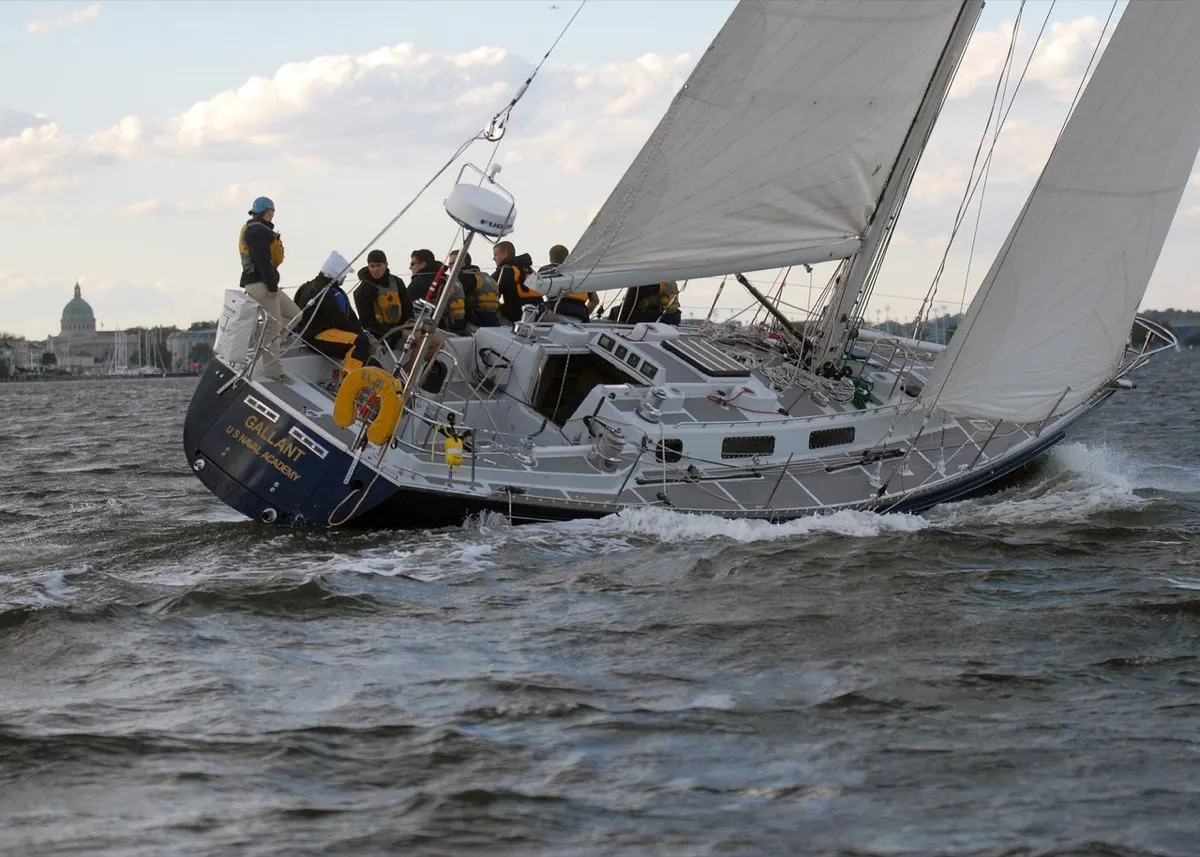
Life jacket rules in the US and the main charter countries
Each country sets its own equipment rules for boats in its waters. In the United States, federal law requires a USCG approved wearable life jacket for every person on board, in the right size and in serviceable condition, and kept readily accessible. Children under 13 must wear one while underway unless they are below deck or in an enclosed cabin, and some states set their own age limits. An inflatable only counts if its cylinder is full and every status indicator is green. In the UK, the RYA recommends always wearing a life jacket or buoyancy aid unless you are certain you do not need one.
If you charter in Europe, these rules apply in the most popular cruising areas:
| Country | On board | Must be worn |
|---|---|---|
| Croatia | a life jacket for everyone on board, children's sizes for children, with a light depending on the navigation area | on boats faster than 20 knots while underway, except in enclosed spaces |
| Italy | within 6 nautical miles of the coast at least category 100, further out at least category 150, with an automatic light and the boat's registration number; sailing boats also a harness with tether | when sailing alone at night |
| Spain | one per person with a light; zone 1 (unlimited) 275N plus one spare, zones 2 to 4 (up to 60 nautical miles) 150N, zones 5 to 7 100N; children's jackets to fit | no general rule |
| France | one per person, matched to build and weight, levels 50, 100 and 150 under ISO 12402, plus a light lasting at least 6 hours | no general rule |
On a charter yacht, the company supplies the required equipment. Whether it is complete and working is up to you to check at the charter boat handover: count the jackets, check children's sizes, look at the inflator indicators, the tethers and the jacklines. Many sailors bring their own life jacket because they know its fit and service history. Everything else for the bag is in the sailing packing list.
Before every trip: check your life jacket in 6 steps
At RNLI lifejacket clinics, 30 percent of the jackets brought in would not have worked in an emergency. The check takes a few minutes per jacket:
- Inspect cover and straps. Tears, open stitching, frayed webbing and broken buckles mean the jacket should not be used.
- Check the cylinder. The CO2 cylinder must be screwed in tight. A loose cylinder is a common cause of life jacket failure. Replace heavily corroded cylinders.
- Read the indicators. Many firing heads have windows showing the state of cylinder and trigger. Everything must be green, otherwise the jacket is not serviceable.
- Check expiry dates. The firing mechanism and the light carry a date. Out of date means replace.
- Carry a spare. A rearming kit with cylinder and firing head gets an accidentally inflated jacket back in service. Repack it carefully following the manufacturer's instructions.
- Keep to the service interval. On top of your own checks, the jacket goes to an approved service station at the interval the manufacturer specifies.
Foam jackets need less care: no rips in the fabric, straps and zips in order, and the foam neither crumbling nor compressed.
Common mistakes
- Crotch straps undone. Without them the jacket rides up in the water and your head drops.
- Jacket too loose. Not readjusted after putting on a fleece, it ends up at your chin instead of on your body.
- 150N over heavy foul weather gear. Air trapped in clothing can stop the jacket turning you. With heavy gear, go for 275N.
- Buying a child's size to grow into. A child can slip out of a jacket that is too big. Always buy the right size.
- Jacket on board, not on you. In a cockpit locker it helps nobody. Leaving and entering harbour and going forward are exactly when it belongs on your body.
- No plan for the emergency. Someone who goes overboard needs a crew that knows how to call for help. How to send a Mayday on VHF is explained in its own guide.
Safety briefing and logbook
Before you leave the dock for the first time, the skipper shows the crew where the life jackets are, how to put them on and where tethers, the horseshoe buoy and flares are stowed. SeaMemo keeps a record: the Charter Check documents the safety equipment with photos at handover, and the shared checklist shows who has covered which part of the briefing. Underway, the app tracks every leg by GPS, even offline, and adds sea miles, duration and log entries to your logbook.


Sources
- RYA: Personal flotation devices, lifejackets, buoyancy aids and impact vests: buoyancy levels, buying, fitting, checks and servicing
- US Coast Guard Boating Safety: Wearing your life jacket: carriage rules, child wear rule, performance types and levels, inflatables
- DGUV FBPSA-004: Selecting suitable life jackets (German, PDF): air trapped in clothing, signal lights
- Croatia: Pravilnik o brodicama, čamcima i jahtama, NN 13/2020 (Croatian)
- Confindustria Nautica: safety equipment under DM 133/2024 (Italian, PDF)
- Spain: Real Decreto 339/2021, article 7 (Spanish, PDF)
- France: Ministère de la Mer, safety equipment for pleasure boats (French)
Get SeaMemo for free
Logbook, travel journal and crew in one app. For iPhone and Android, works offline at sea.


Frequently asked questions
What newton rating do I need for sailing?
For coastal and offshore sailing at least 150 newtons, certified to ISO 12402-3 or EN 396. That is also the RYA's advice. A 275N jacket (ISO 12402-2) is meant for extreme offshore conditions and for anyone wearing heavy or air trapping clothing, which can stop a 150N jacket from turning you face up.
What is the difference between a buoyancy aid and a life jacket?
A buoyancy aid (usually 50N foam) helps you float while you swim or tread water, but it will not turn an unconscious person face up. It suits dinghy sailing, windsurfing and kayaking, where you expect to end up in the water. A life jacket of 150N or more is designed to turn an unconscious wearer face up and keep the mouth and nose clear.
What are the US Coast Guard life jacket requirements?
A recreational boat must carry a USCG approved wearable life jacket for each person on board, in the right size and in good and serviceable condition. Children under 13 must wear one while the boat is underway, unless they are below deck or in an enclosed cabin. State laws may add to this.
How often should an inflatable life jacket be serviced?
At the interval the manufacturer specifies, by an approved service station. In between, check it yourself: no damage to the cover or straps, the CO2 cylinder screwed in tight and free of corrosion, firing head and light in date, and every indicator on the inflator showing green.
Are inflatable life jackets OK for non swimmers?
The US Coast Guard says inflatable life jackets are not appropriate for weak or non swimmers, and they are made in adult sizes only. Children and weak swimmers are better off with an inherently buoyant foam jacket in the right size.
What is a jackline?
A jackline (or jackstay) is a strap or wire running along the deck from the cockpit to the bow. You clip your tether to it from the harness in your life jacket and can move forward without unclipping, so you stay attached to the boat.