 SeaMemo
Reefing a sail: when to reef and how to make the main and jib smaller
Reefing means reducing the area of a sail as the wind builds. The old rule still holds: reef the first time you think about it. Reef the mainsail on a close hauled or close reaching course: ease the vang and the mainsheet, lower the halyard, hook the reef tack cringle on the reef hook, tension the halyard again and haul in the reefing line. The headsail is rolled in on the furler, which is easiest on a broad reach. A reefed boat is often no slower, but it heels less, carries less weather helm and is far more relaxed to sail.
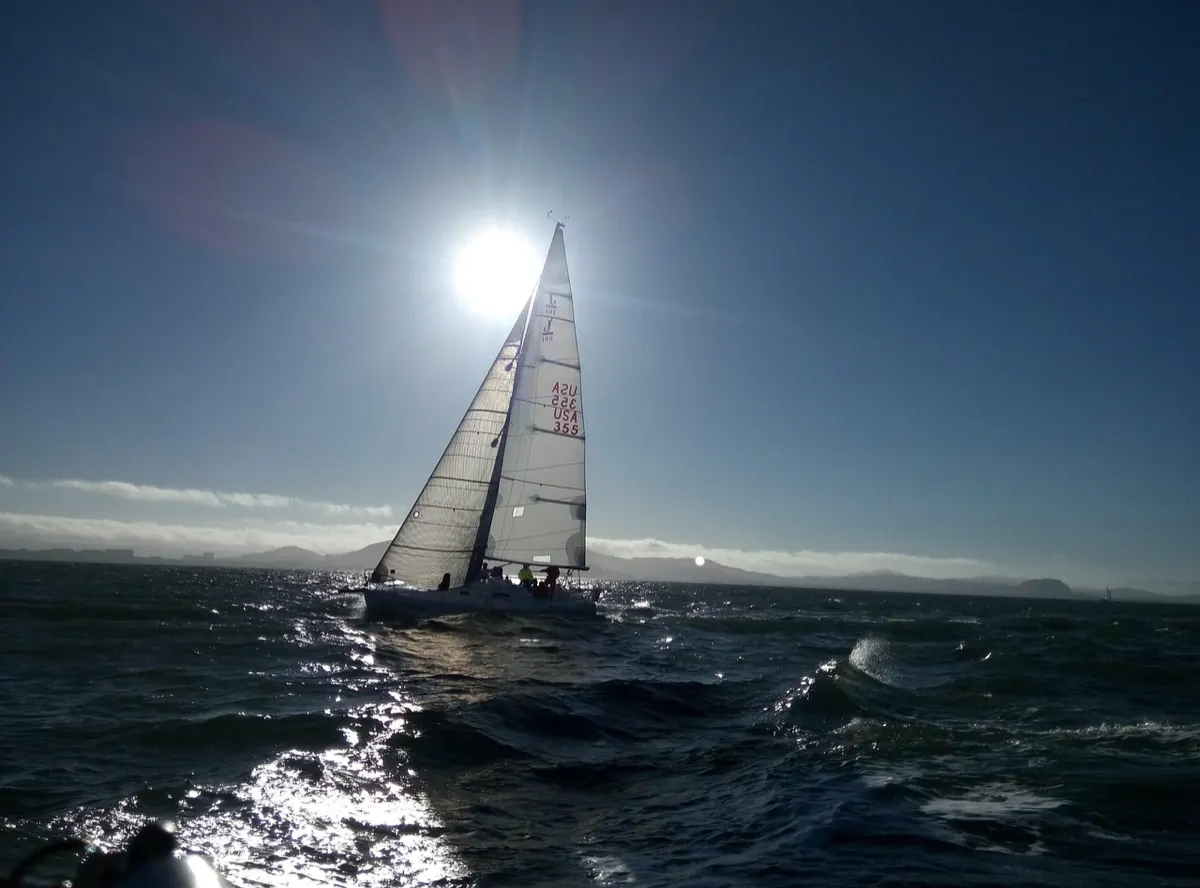
What reefing means
Reefing means making a sail smaller. The stronger the wind, the more pressure on the sails. The boat heels further, develops weather helm and gets harder to steer. In the worst case the rudder loses its grip and the yacht rounds up into the wind. With less sail the boat stays more upright and under control.
A mainsail on a cruising yacht usually has two or three reefs. The first reef takes away the least area and goes in first; the second and third follow as the wind rises. Taking a reef out again is called shaking out a reef. If you want to check what the boom, luff, leech and clew are, see the guide parts of a sailboat.
When to reef
The best known saying among sailors: if you are thinking about reefing, it was probably due already. Put it off and you end up doing it under pressure when a gust hits. These signs tell you the boat is carrying too much sail:
- Lots of heel: many modern yachts stop sailing efficiently beyond about 20 degrees of heel. More heel loads the gear and is uncomfortable for the crew.
- Heavy weather helm: you have to fight the helm all the time to keep the boat from turning into the wind.
- Rounding up: if the boat rounds up into the wind even though you steer against it, you are past the reefing point.
- The autopilot is working hard: frequent or large corrections are a clear sign. Below deck you can hear it in the pilot's motor.
- Sea state: heel, waves and helm together decide, not the wind instrument alone.
There is no fixed wind speed for reefing. It depends on the boat, the sails and the crew. Before you reef, you can flatten the sails: more backstay, tighter outhaul, traveller down to leeward. If that is not enough, it is time for the first reef.
Two situations catch people out. Downwind you feel less wind because you are sailing with it. Reef at the wind strength at which you would reef upwind, or the next time you head up you are in for a surprise. And before you leave: if the marine weather forecast calls for strong wind, a small crew is better off reefing in the harbour. Shaking out a reef at sea is easier than starting with full sail in strong gusts. How wind forces translate into knots is in the Beaufort scale.
Reefing systems at a glance
How you reef depends on the gear on your boat. On charter yachts you will mostly find these systems:
| System | How it works | Good to know |
|---|---|---|
| Slab or jiffy reefing | the main is lowered, the luff cringle goes onto the reef hook at the boom, a reefing line pulls the leech down onto the boom | classic and robust, gives a flat shape; someone has to go to the mast |
| Two line reefing | like slab reefing, but one line each for luff and leech is led to the cockpit | reef without leaving the cockpit |
| Single line reefing | one line runs through luff, boom and leech | convenient, but friction makes it better suited to smaller boats |
| Roller reefing headsail | the headsail is rolled around the forestay as far as needed | stepless and from the cockpit; the furling line must be well secured |
| In mast or in boom furling | the mainsail is rolled into the mast or into the boom | quick and easy, but the sail shape is poorer; a jammed furler cannot simply be dropped |
At the charter boat handover it pays to run through the reefing system once in the harbour: which line belongs to which reef, are there marks on the halyard, are the reef ties on board?
Slab reefing the mainsail step by step
This is how the first reef goes in on a mainsail with slides on the mast. Agree on roles beforehand: who steers, who works at the mast, who handles halyard and reefing line in the cockpit.
- Sail close hauled or on a close reach. Make sure there is open water ahead. The helmsman, autopilot or wind vane holds the course; the boat keeps sailing steadily under the headsail.
- Ease the vang. Only then can the boom rise as the sail comes down.
- Ease the mainsheet until the pressure is out of the sail and the main luffs quietly.
- Lower the main halyard under control until the luff cringle can be hooked onto the reef hook at the gooseneck. Guide the halyard by hand so it does not jam.
- Tension the halyard again, first by hand, then on the winch, until the luff is tight. A mark on the halyard shows you next time how far to lower.
- Haul in the reefing line at the leech until the cringle sits on the boom. It pulls down and aft, like an outhaul, and should be very tight. Make sure no sail gets trapped between boom and reefing line.
- Trim the mainsheet first, then the vang. The main now sets with a flat shape.
- Tie in the loose sail. The reef points gather the spare sail loosely through the reef eyelets, not around the boom.
- Tidy the tails so nothing trails over the side or catches on the end of the boom.
If a line will not move by hand, do not force it with the winch. Usually something is jammed, a line is led wrongly or a fitting is caught. With two line or single line reefing the order is the same; you just handle halyard and reefing lines from the cockpit.

Reefing the headsail with a furler
The genoa or jib on charter yachts almost always sits on a roller furler. This is how you roll it in:
- Bear away onto a broad reach. A common mistake is furling close to or even head to wind. On a deep course there is less pressure in the headsail and it furls more easily.
- Ease the sheet only so far that the sail is just still drawing and the sheet keeps a little tension. That way the sail rolls tightly and without creases.
- Pull in the furling line to the reef mark you want. Many headsails have coloured marks on the foot.
- Move the sheet lead forward, or the sheet pulls on the smaller sail at too flat an angle. On simple tracks this only works while there is little load on the sheet.
- Secure the furling line well. If it slips, the sail unrolls with a bang.
- Return to your course and trim the sheet again.
An in mast furling main, on the other hand, is rolled in close to the wind so the sail feeds flat into the mast.
Main or headsail first?
There is no rule for every boat. Modern yachts with a tall, narrow main and a small furling genoa often reef the main first, sometimes twice, before touching the genoa. Older boats with a large overlapping genoa usually reduce the headsail first. The classic approach reduces both sails evenly so the boat stays balanced and carries neither too much weather helm nor lee helm. Try it on your boat and remember what works.
Shaking out a reef
When the wind drops and the boat feels underpowered, take the reef out again in reverse order:
- Untie every reef point. Forget one and it rips the eyelet out of the sail when you hoist.
- Ease the vang and the mainsheet.
- Ease the reefing line at the leech.
- Take the cringle off the hook and hoist the main halyard tight.
- Trim the sheet and vang again and tidy the lines.
On the headsail you ease the furling line under control while trimming the sheet.
Staying safe while reefing
- Clip on. Anyone working at the boom or mast clips their tether on, ideally on the windward side. Which life jacket suits this is covered in types of life jackets.
- Clear roles. Everyone knows their job before the manoeuvre. Short, loud commands.
- The helm warns. The helmsman calls out big waves and steers around them while someone is working forward.
- A steady boat. Close hauled under headsail the boat sits steadily enough to work safely at the boom.
- Reef early. The more wind, the harder and riskier the manoeuvre. Reefing early takes the load off rig and crew.
Common mistakes
- Reefing too late. Wait until it is really blowing and you reef under stress, often with the engine on and the bow to the wind.
- Forgetting the vang. If it is still tight, the boom cannot rise and the sail cannot come down.
- Tying the sail around the boom. The reef points then carry load and the sail can tear at the eyelets.
- Leaving reef points tied when shaking out. The classic: an eyelet rips out as you hoist.
- Furling the headsail close to the wind. The sail flogs, the roll is loose and the furler gets stiff.
- Furling line not secured. If it lets go, the whole genoa is suddenly out again.
- Forcing it with the winch. If it will not go by hand, there is a reason. Look first, then winch.
Recording reefs in the logbook
Your logbook should show when you reefed, in what wind and which reef. Next time you sail the same boat, you know when the first reef was due. SeaMemo records every leg by GPS, offline too, with distance, duration and speed. Add notes and journal entries, such as when the reef went in and how the boat felt afterwards. What else belongs in a log is covered in how to keep a sailing logbook, and the points of sail are explained in windward and leeward.


Sources
- North Sails: How to reef a mainsail: steps, load on reef tack and clew, halyard marks
- Yachting World: How to reef short handed and how to know when the time is right: signs, autopilot, two line reefing
- YACHT: How to reef properly for maximum safety and comfort: timing, which sail first, furling headsail and in mast main
- Wikipedia: Reefing: terms, slab reefing, roller reefing
Get SeaMemo for free
Logbook, travel journal and crew in one app. For iPhone and Android, works offline at sea.


Frequently asked questions
When should you reef a sail?
The first time you think about it. Clear signs are increasing heel, heavy weather helm, a boat that keeps rounding up into the wind and an autopilot that makes frequent or large corrections. If the boat rounds up out of control, the right moment has usually passed.
At what wind speed should you reef?
There is no fixed wind speed. It depends on the boat, the sail area, the sea state and the crew. What counts is how the boat feels: many modern yachts stop sailing efficiently beyond about 20 degrees of heel. Downwind you easily underestimate the wind, so reef at the wind strength at which you would reef upwind.
Does reefing make the boat slower?
Not necessarily. With less heel, less weather helm and less rudder load, a yacht in strong wind often sails just as fast, but under better control. Once the boat reaches hull speed, more sail area adds very little speed anyway.
What is slab reefing?
In slab or jiffy reefing the mainsail is partly lowered. The reef cringle at the luff goes onto the reef hook at the boom, and a reefing line pulls the cringle at the leech down onto the boom. The loose sail is tied up with reef points. When the lines are led back to the cockpit, it is called two line or single line reefing.
Should you reef the main or the jib first?
That depends on the boat. Modern yachts with a tall, narrow mainsail and a small furling genoa often reef the main first. Older boats with a large overlapping genoa usually reduce the headsail first. The classic approach is to reduce both sails evenly so the boat stays balanced.
Why shouldn't you tie the reef points around the boom?
Reef points only hold the loose sail together and should carry no load. The load belongs on the reef tack and the reef clew. If you tie the sail around the boom, it can tear at the eyelets. Before shaking out a reef, always untie every reef point first.