 SeaMemo
The Beaufort Scale: every wind force in knots, mph and km/h
The Beaufort scale sorts wind into 13 forces from 0 (calm) to 12 (hurricane). Force 4 is 11 to 16 knots or 13 to 18 mph, force 6 is already 22 to 27 knots or 25 to 31 mph. The scale describes the mean wind at 10 metres above the surface. Gusts can be much stronger.
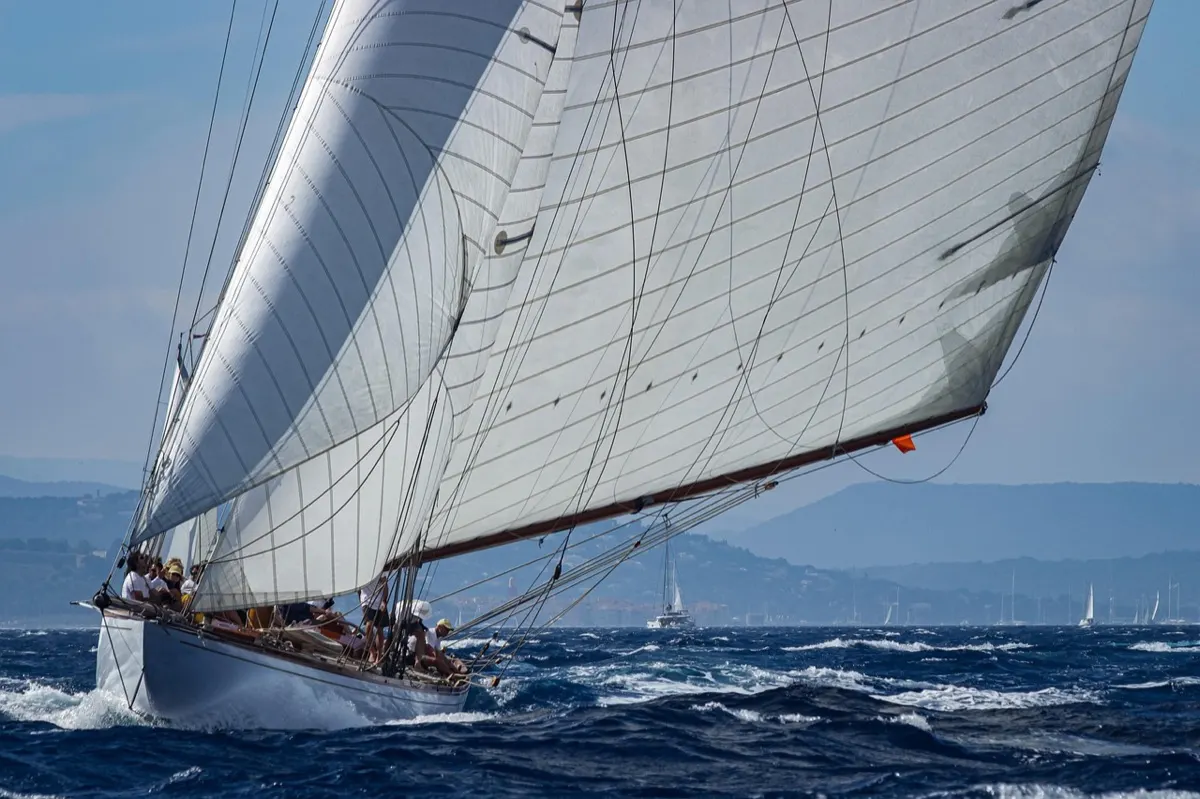
The Beaufort scale chart
Descriptions and knots come from the UK Met Office, km/h and metres per second from the German Weather Service. All values are for the mean wind at 10 metres.
| Force | Description | Knots | mph | km/h | m/s |
|---|---|---|---|---|---|
| 0 | Calm | < 1 | < 1 | < 1 | 0 to 0.2 |
| 1 | Light air | 1 to 3 | 1 to 3 | 1 to 5 | 0.3 to 1.5 |
| 2 | Light breeze | 4 to 6 | 4 to 7 | 6 to 11 | 1.6 to 3.3 |
| 3 | Gentle breeze | 7 to 10 | 8 to 12 | 12 to 19 | 3.4 to 5.4 |
| 4 | Moderate breeze | 11 to 16 | 13 to 18 | 20 to 28 | 5.5 to 7.9 |
| 5 | Fresh breeze | 17 to 21 | 19 to 24 | 29 to 38 | 8.0 to 10.7 |
| 6 | Strong breeze | 22 to 27 | 25 to 31 | 39 to 49 | 10.8 to 13.8 |
| 7 | Near gale | 28 to 33 | 32 to 38 | 50 to 61 | 13.9 to 17.1 |
| 8 | Gale | 34 to 40 | 39 to 46 | 62 to 74 | 17.2 to 20.7 |
| 9 | Strong gale | 41 to 47 | 47 to 54 | 75 to 88 | 20.8 to 24.4 |
| 10 | Storm | 48 to 55 | 55 to 63 | 89 to 102 | 24.5 to 28.4 |
| 11 | Violent storm | 56 to 63 | 64 to 72 | 103 to 117 | 28.5 to 32.6 |
| 12 | Hurricane | 64+ | 73+ | 118+ | 32.7+ |
Beaufort calculator: convert wind speed to force
Does your anemometer or weather app show knots or km/h? Enter the value and you get the force.
Beaufort calculator
Comma or dot both work. The wave height is a typical value for a fully developed sea.
What each force looks like at sea
The scale was built for observing the sea, so you can often read the force from the water without any instrument. The wave heights come from the Met Office, probable and probable maximum.
| Force | Waves in m (probable / maximum) | What the sea looks like |
|---|---|---|
| 0 | 0 | Like a mirror |
| 1 | 0.1 / 0.1 | Ripples without foam |
| 2 | 0.2 / 0.3 | Small, short wavelets, crests do not break |
| 3 | 0.6 / 1.0 | Crests begin to break, scattered white horses |
| 4 | 1.0 / 1.5 | Longer waves, frequent white horses |
| 5 | 2.0 / 2.5 | Moderately long waves, white horses everywhere, some spray |
| 6 | 3.0 / 4.0 | Large waves, many white crests, spray |
| 7 | 4.0 / 5.5 | Sea heaps up, foam blows in streaks |
| 8 | 5.5 / 7.5 | Long, moderately high waves, crests break off, clear streaks of foam |
| 9 | 7.0 / 10.0 | High waves, dense foam streaks, spray begins to reduce visibility |
| 10 | 9.0 / 12.5 | Very high waves with overhanging crests, the sea looks white |
| 11 | 11.5 / 16.0 | Exceptionally high waves, the sea is almost covered in foam |
| 12 | 14+ | Air full of foam and spray, sea completely white, very little visibility |
The Met Office makes two points: the values refer to well developed waves in the open sea, and the sea lags behind when the wind gets up. In a bay or in the lee of an island the wind can be strong without big waves.
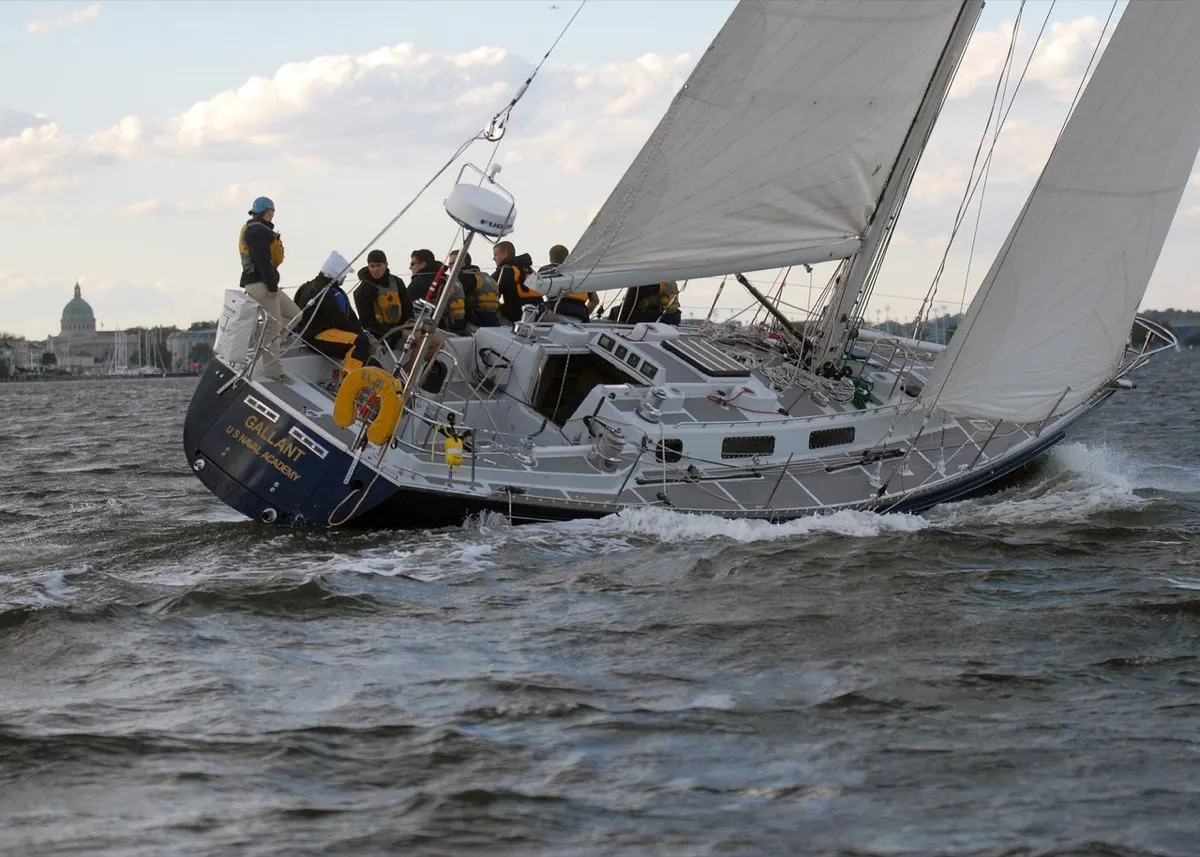
What each force means under sail
This is a rough guide from cruising practice, not a limit. The boat, crew, sea state and wind direction all play a part, and so do your charter company's rules.
- Force 0 to 2: Calm to light breeze. The yacht makes little way and you will often motor.
- Force 3 to 4: The comfortable range for most crews. The yacht sails well and stays calm enough for beginners.
- Force 5: White horses all around. Many crews now think about reefing, and it gets wet upwind.
- Force 6: A strong breeze. Sail reefed and secure everything on deck and below. For an inexperienced crew a sheltered harbour is now the better choice.
- Force 7: Only for an experienced crew in a suitable boat. On a charter holiday you would normally stay put.
- Force 8 and above: Stay in harbour if you possibly can and change your plan to suit the weather.
How much chain to let out in which wind is explained in our guide to anchoring a boat.

As the wind builds, gybing gets demanding. When to tack round instead and how to avoid an accidental gybe is in our guide to tacking and gybing.
How to read the wind in a forecast
- Mean wind and gusts. The force describes the mean wind. Gusts come on top, so always check both values in the forecast.
- Knots or Beaufort. Many weather apps show knots, while marine forecasts often use Beaufort. The chart above links the two, and our guide to knots to mph has the exact speed conversions.
- Apparent wind. The instrument on board shows the wind you feel on board. Sailing upwind it reads higher than the true wind, sailing downwind it reads lower. The force refers to the true wind.
- Height of the instrument. The scale refers to 10 metres above the surface. An anemometer at the masthead or a handheld one in the cockpit reads differently.
The formula behind the scale
The modern scale follows a simple relationship: v = 0.836 × B3/2, with v in m/s at 10 metres and B as the force. For force 6 that gives about 12.3 m/s, which is around 24 knots or 44 km/h, right in the middle of the chart.
Where the scale comes from
The British naval officer and hydrographer Francis Beaufort devised the scale in 1805. The Royal Navy brought it onto its ships in the late 1830s, and in 1853 the first international meteorological conference in Brussels accepted it as generally applicable. In 1916 the descriptions changed from how the sails behaved to how the sea behaves. Speeds in knots and km/h came later.
Record the wind without paper
Wind and sea state belong in your logbook. SeaMemo's GPS tracking records route, nautical miles, duration and average speed in knots, and adds weather, wind and harbours when you finish the leg. In the journal you write down how the day really felt.


It's also worth a look before you cast off. With a big sea forecast, read our guide to seasickness when sailing, and at the charter handover check the reefing system before you need it.
Sources
- Met Office: Beaufort wind force scale: knots, descriptions, wave heights and notes
- German Weather Service (DWD): Beaufort scale, in German: km/h and m/s
- Wikipedia: Beaufort scale: mph, formula, history and the extension to force 17
Get SeaMemo for free
Logbook, travel journal and crew in one app. For iPhone and Android, works offline at sea.


Frequently asked questions
How many knots is Beaufort 6?
Force 6 is 22 to 27 knots, which is 25 to 31 mph, 39 to 49 km/h or 10.8 to 13.8 m/s. The scale calls it a strong breeze.
What Beaufort force is a gale?
Force 8 is a gale, with a mean wind of 34 to 40 knots. Force 7 is a near gale and force 9 a strong gale, which the UK Met Office describes as a severe gale. Force 12 is hurricane force, from 64 knots.
What wind force is too much for sailing?
There is no fixed limit, because it depends on the boat, the crew, the sea state and the wind direction. Force 3 to 4 is comfortable sailing, force 6 gets demanding for an inexperienced crew, and at force 8 and above you are better off in harbour.
How big are the waves at Beaufort 5?
The Met Office gives about 2 metres at force 5 in the open sea, with a probable maximum of 2.5 metres. Those figures are for fully developed waves. Near the coast, or when the wind has only just picked up, waves are usually smaller.
Is there anything above Beaufort 12?
The World Meteorological Organization's 2012 manual defines the scale only up to force 12. Taiwan, mainland China and Vietnam use an extension up to force 17 because of typhoons.