 SeaMemo
Port and Starboard: Left and Right on a Boat, and How to Never Mix Them Up
Port is the left side of a boat and starboard the right side, always as seen when you face forward towards the bow. The words belong to the boat, not to you: face the stern and port is on your right. At night the sidelights show the sides: port is red, starboard is green. The quickest memory aid: port and left both have four letters.
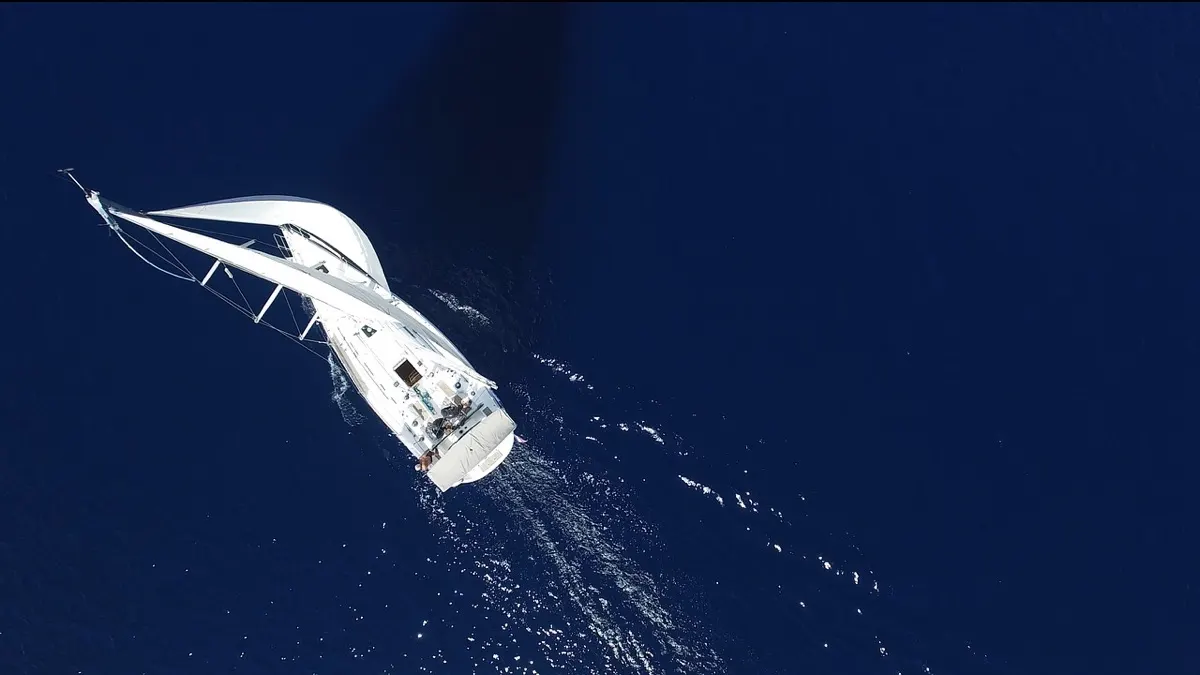
Port and starboard: the two sides of a boat
Port and starboard name the sides of a vessel as seen from on board facing the bow, the direction the boat moves when going ahead. Port is the left side, starboard the right. Unlike left and right, the terms are fixed to the boat and do not depend on where anyone is standing or which way they face. That is why orders on board are unambiguous, whether someone is at the helm, on the foredeck or sitting at the tiller facing aft.
The same goes for everything on and around the boat. There is a port shroud and a starboard shroud, a port winch and a starboard winch. An island “to starboard” is on the right of the boat, a harbour “to port” on the left. And “we are mooring port side to” means fenders and lines go on the left side.
Simplified sketch, not to scale. Sectors as defined in COLREGs Rule 21.
| Port | Starboard | |
|---|---|---|
| Side when facing the bow | left | right |
| Sidelight colour | red | green |
| Lateral marks entering harbour in Europe (IALA Region A) | red | green |
| Lateral marks entering harbour in the USA (IALA Region B) | green | red |
| Old name | larboard | steorbord (Old English) |
How to remember port and starboard
- Four letters. Port and left both have four letters. It is the simplest aid of all.
- Red port wine. Port wine is red, and so is the port light. Put it together as a question: is there any red port left?
- Short with short. Port, left and red are the shorter words. Starboard, right and green are the longer ones. That gives you the colours as well.
- Alphabetical order. L comes before R, P comes before S, and you read from left to right. Port and starboard are in the same order as left and right.
What makes it stick is practice. On your next trip, call out which side the fenders and lines go on for every manoeuvre, and ask the crew to point to port before you leave the dock.
Where the words come from
Before ships had a rudder on the centreline, they were steered with a large steering oar over the side. Because most people are right handed, it sat on the right hand side of the stern. Old English called this side steorbord, from steor, to steer, and bord, the side of a boat. The same steering side survives in German Steuerbord, Dutch stuurboord, French tribord, Spanish estribor and Italian tribordo.
The helmsman stood with his back to the left side, which is why Old English called it bæcbord, the back side. German Backbord and French bâbord come from the same root. In English the word changed: from around 1300 the left side was called ladde borde, the loading side, which became larboard in the 1500s. With the steering oar in the way on the right, boats came alongside to load on the left, so that side was also called port, the side facing the port.
Larboard and starboard sound almost the same, especially when shouted into the wind. In 1844 the Royal Navy ordered that port be used instead, and the United States Navy followed in 1846. Whalers kept saying larboard well into the 1850s, and Mark Twain still used it for the Mississippi steamboats of his day.
The two sides also gave their names to the crew. In a two watch system, the teams are often called port watch and starboard watch.
Bow, stern and the other directions on board
Port and starboard are only two of the words that describe direction on a boat. These are the ones you will hear on every trip:
| Term | Meaning |
|---|---|
| bow | the front end of the boat, usually where the anchor and pulpit are |
| stern | the back end of the boat, usually where the steering is |
| amidships | the middle of the boat, on the centreline |
| ahead | in front of the bow, “right ahead” means dead straight in front |
| astern | behind the stern |
| abeam | directly to the side, at right angles to the centreline |
| fore and aft | along the length of the boat, from bow to stern |
| windward | the side the wind is coming from |
| leeward | the side sheltered from the wind |
To give the position of another boat, a buoy or a rock, combine them: “tanker fine on the starboard bow”, “yacht abeam to port”, “buoy astern”.

Starboard tack and port tack
Under sail, port and starboard also tell you which way the wind is blowing across the boat. You are on starboard tack when the wind comes over the starboard side, and on port tack when it comes over the port side. The mainsail is always on the opposite side. The collision regulations define the windward side the same way: the side opposite to where the mainsail is carried.
Changing from one tack to the other is a tack or a gybe. How both manoeuvres work step by step is in our guide to tacking and gybing.
Red and green: the sidelights
So that others can tell which way you are heading at night, every vessel under way shows lights. Rule 21 of the International Regulations for Preventing Collisions at Sea (COLREGs) defines them: the starboard sidelight is green, the port sidelight red. Each shines over an arc of 112.5 degrees, from right ahead to 22.5 degrees abaft the beam on its own side. A white sternlight covers the 135 degrees astern. Together the three lights make exactly one full circle.
A sailing vessel under way shows sidelights and a sternlight. If she is under 20 metres long, all three may be combined in one tricolour lantern at or near the masthead (Rule 25). A power driven vessel also shows a white masthead light forward, which shines over 225 degrees (Rule 23).
When a boat comes straight towards you, you see both sidelights: its green light on your left and its red light on your right, because seen from ahead its starboard side is to your left. This is how to read other vessels at night:
| You see | What it means |
|---|---|
| red only | You are looking at its port side. It is crossing your line of sight from right to left. |
| green only | You are looking at its starboard side. It is crossing from left to right. |
| red and green | The vessel is heading straight for you. |
| a single white light | Usually a sternlight: the vessel is moving away or you are overtaking it. It can also be a boat at anchor. |

Port and starboard in the collision regulations
The COLREGs could not be written without port and starboard. The rules you will use most:
- Two sailing boats: when they have the wind on different sides, the boat with the wind on her port side keeps out of the way (Rule 12).
- Two power driven vessels head on: each alters course to starboard so that they pass port to port (Rule 14).
- Two power driven vessels crossing: the one which has the other on her own starboard side keeps out of the way (Rule 15). At night, that is the one that sees the other's red light.
- Narrow channels: keep as near to the outer limit of the channel on your starboard side as is safe and practicable (Rule 9).
All the rules with diagrams and a decision guide are in our guide to COLREGs and right of way.
Red and green buoys in a channel
Buoyage is built on port and starboard too. Lateral marks show the sides of a channel. In Europe, Africa, Australia, New Zealand and the Gulf (IALA Region A), red marks are kept to port and green marks to starboard when entering from sea, so the colour of the buoy matches your sidelight on the same side. In North, Central and South America, Japan, Korea and the Philippines (Region B) it is the other way round, hence the American saying “red right returning”. Leaving harbour reverses both.
Shapes, numbers and the yellow and black cardinal marks are explained in our guide to channel markers and buoys.
Port and starboard at a charter handover
When you take over a charter yacht, every location counts. “Gelcoat chip on the port bow” can be matched up at check out, “scratch on the left” cannot, because left depends on where you stand. That is why the charter check in SeaMemo lists the hull by bow, stern, port side and starboard side. You tick off what is fine and record any defect with a comment and photos.


At the end, you and the charter company's representative both sign on your phone, and you get the handover report with all photos as a PDF. What else to look at is in our charter boat handover checklist.
Common mix ups
- Facing aft. Sitting at the tiller facing the stern, port is on your right. Port is always the left side of the boat when facing the bow.
- Going astern. When the boat reverses, for example to moor stern to, the sides do not change. How that manoeuvre works is in our guide to docking a boat.
- Port tack versus port side. On port tack the wind comes over the port side, but the mainsail is out to starboard.
- Saying left and right. Left and right depend on where you stand and cause confusion on board. Use port and starboard, and explain them to the crew before you leave.
- Man overboard without a side. If you see someone fall in, shout “man overboard to port” or “to starboard”, and keep pointing. The helm then knows at once where to look and which way to turn.
- Buoys abroad. A sailor from the UK or Australia chartering in the USA meets Region B, where red is kept to starboard when entering.
Sources
- Wikipedia: Port and starboard: definition, steorbord and bæcbord, larboard, Royal Navy 1844 and US Navy 1846, port and starboard watches
- NOAA: Why do ships use port and starboard instead of left and right?: fixed sides, steering oar, the side facing the port
- IALA COLREG: Rule 21, definitions of lights, Rule 23, power driven vessels and Rule 25, sailing vessels
- IALA COLREG: Rule 12, sailing vessels, Rule 14, head on, Rule 15, crossing and Rule 9, narrow channels
- Wikipedia: Windward and leeward
- IALA: Maritime Buoyage System (PDF at Irish Lights): lateral marks in Region A and Region B
Get SeaMemo for free
Logbook, travel journal and crew in one app. For iPhone and Android, works offline at sea.


Frequently asked questions
Is port left or right?
Port is left. It means the left side of the boat when you are on board facing the bow. Starboard is the right side. The terms do not change when you turn around or when the boat goes astern.
What colour is port and what colour is starboard?
Port is red and starboard is green. That is how the sidelights shine under the COLREGs (Rule 21), each over an arc of 112.5 degrees from right ahead to 22.5 degrees abaft the beam.
Why is it called starboard?
Before ships had a rudder on the centreline, they were steered with a steering oar on the right hand side, because most people are right handed. Old English steorbord simply meant the steering side.
Why is the left side called port?
With the steering oar on the right, ships tied up with their left side to the quay. That side was first called larboard, the loading side. Because larboard sounded too much like starboard, the Royal Navy ordered port to be used instead in 1844, and the US Navy followed in 1846.
How do you remember port and starboard?
Port and left both have four letters. Port wine is red, and so is the port light. And port, left and red are all shorter words than starboard, right and green.
What does starboard tack mean?
A sailing boat is on starboard tack when the wind comes over the starboard side, so the mainsail is out to port. When two sailing boats meet on opposite tacks, the boat on port tack has to keep out of the way.