SeaMemo

What is a bareboat charter?
The term means what it says: you get the boat “bare”, without a skipper and without a crew. You plan the route, cast off when you want and you are the skipper on board. That also makes you responsible for the yacht, the crew and every manoeuvre, from leaving the dock on the first day to handing the boat back.
The RYA, the British sailing association, names two alternatives to bareboat: the flotilla, where several charter yachts follow an experienced lead crew from harbour to harbour, and a skipper that many charter companies provide for the whole trip or for single days.
| Type | Skipper | Certificate | Good if |
|---|---|---|---|
| Bareboat | you, in command | required, valid in the area | you have skippered yachts before |
| Flotilla | you, with a lead crew sailing along | set by the operator and the country | you want the safety of a group |
| Skippered | a skipper you hire | not needed for you | you lack the certificate or experience |
Which license you need for a bareboat charter
Which certificate is enough is decided by the country whose flag the charter yacht flies, usually the country where you pick it up. The ICC, the international certificate issued under UNECE Resolution 40, is widely recognised abroad according to the RYA, but not everywhere, and the same goes for the RYA Yachtmaster scheme.
Example Croatia: the Croatian Ministry of the Sea publishes a table of all foreign certificates it recognises (as of 21 May 2026). Any ICC under Resolution 40 also counts there for charter yachts without crew, as long as it is valid for “Coastal waters” and you keep to its restrictions. That matters for sailors from Canada, Australia or anywhere else: if your ICC covers coastal waters, it works in Croatia.
| Certificate | Yachts | Area |
|---|---|---|
| RYA ICC (Coastal Waters) | up to 18 m | Croatian coastal waters and islands |
| RYA Day Skipper, practical course | up to 18 m | also international voyages in the Adriatic |
| RYA Coastal Skipper (CoC) | up to 500 GT | also international voyages in the Adriatic |
| ASA Bareboat Chartering | up to 18 m | Croatian coastal waters and islands |
| US Sailing Bareboat Cruising | up to 18 m | Croatian coastal waters and islands |
| ASA Advanced Coastal Cruising | up to 24 m | also international voyages in the Adriatic |
| US Sailing Coastal Passagemaking | up to 24 m | also international voyages in the Adriatic |
Radio and entry level courses. For every certificate in the list: if a VHF radio or GMDSS VHF set is permanently fitted, you also need a matching radio certificate. ASA Basic Coastal Cruising and US Sailing Basic Keelboat only cover smaller boats within 6 nm of the coast, not charter yachts.
The RYA Day Skipper shorebased certificate also appears in the list, for yachts up to 18 m in Croatian coastal waters. For the radio, the SRC (Short Range Certificate) is the certificate for marine VHF. Sailing from the US? Ask the charter company which radio certificate it accepts. How the ICC fits in with the rules at home in the US, UK, Canada and Australia is covered in our guide to the boat license.
Other sailing areas: for British sailors, the RYA lists evidence of competence as needed in Croatia, Greece, Italy (coast), Spain, Turkey and Portugal, and recommends the ICC for all of them. The overview is written for UK sailors, but it shows clearly that in the popular charter areas you cannot skipper a yacht without a certificate.
Proving experience: your sailing resume
Your certificate says you are allowed to skipper a yacht. Whether you can handle the sailing area is something the charter company often wants to know as well. One large charter company, for example, grades its destinations by experience level and asks for a sailing resume, or sailing CV, before you book. For its most demanding level, at least one crew member needs experience in strong winds, longer passages, shallow water and tides.
A good sailing resume includes:
- Every trip with date, sailing area and length
- The boat: type, length, monohull or catamaran
- Sea miles per trip and in total, plus night passages
- Your role: skipper, mate or crew
- Certificates and radio certificate with date of issue
If you piece your trips together from memory years later, the miles usually end up as rough guesses. It is easier to write down every leg as you sail it, in your sailing logbook or in an app. If you still lack experience as a skipper, mile building with an instructor is a good step in between.

From those records SeaMemo also creates an English sea miles certificate as a PDF. If you are working towards Day Skipper or Yachtmaster, the guide to the RYA logbook shows how to log your miles for it. The app is free for iPhone and Android.
How it works, from booking to return
Before you book
- Pick a sailing area that suits your experience. An area with short hops and plenty of harbours is more forgiving than open water with strong winds.
- Read the contract. The RYA recommends always having a written charter agreement. Check that the yacht is insured through the owner or operator, and under which conditions the deposit is kept.
- Sort out your documents. Send your certificate, radio certificate and sailing resume in advance if the charter company wants to see them, and bring the originals.
Before you travel
- Prepare the crew list. Keep the names and passport details of everyone on board ready, since charter companies often ask for them.
- Pack. Soft bags, papers, foul weather gear: it is all in the sailing packing list.
At the charter base
- Briefing and check in. The RYA recommends that the owner or operator and the charterer check and sign off the condition of the yacht together, right before and right after the charter. What to look at is in the charter boat handover checklist.
- Agree on a damage plan. Settle in advance what happens if something gets damaged and how a dispute is resolved. If something happens on the way, note witnesses from your crew or from neighbouring boats.
Back in the marina
- Return with a report. Walk through the boat together, note any differences from the check in report, and only then have the deposit released.
Costs: the deposit and what comes on top of the charter fee
The charter fee covers the yacht for the time you booked. What comes on top varies by charter company, sailing area and season. Ask about these points before you book:
- Deposit: amount, how you pay it and when you get it back
- Extras at the base: for example final cleaning, bed linen, a dinghy with outboard
- On the way: diesel, marina berths, mooring buoys and local fees
- A skipper or other services, if you add them
Bareboat or skippered charter?
The RYA’s advice: if you have no experience or do not want the responsibility, hire a skipper or join a flotilla. Being honest with yourself protects your crew, the boat and your deposit.
Bareboat suits you
- You hold a valid certificate and radio certificate
- You have skippered yachts of this size before
- You can lead docking, anchoring and reefing
- At least one crew member can back you up
A skipper or flotilla suits you
- You lack the certificate or the radio certificate
- So far you have only sailed as crew
- The area is harder than any you have sailed
- You want to learn without making every call alone
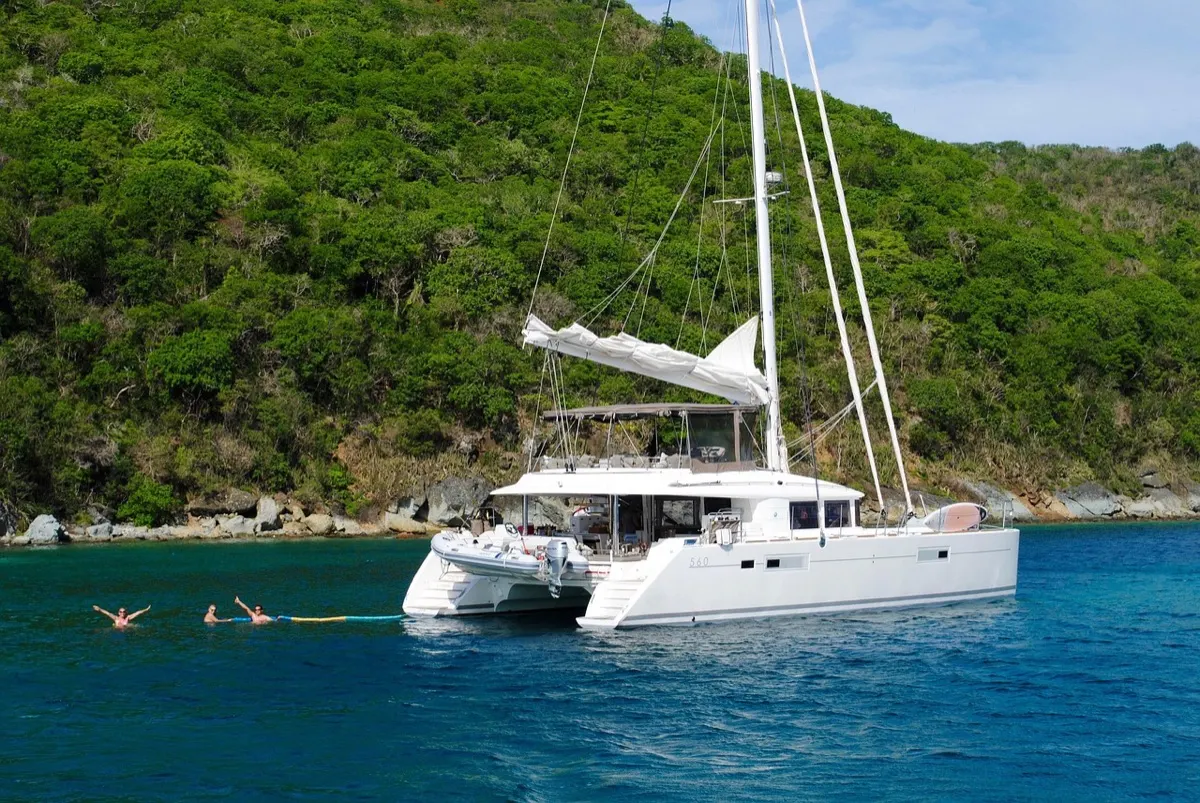
Without a certificate you can also sail as crew with an experienced skipper. How to find a place on board is in our guide on how to crew on a sailboat.
Common mistakes on your first bareboat charter
- Only looking at the certificate. A charter company can ask for experience even if your certificate is valid. Send your sailing resume before you book.
- Forgetting the radio certificate. In Croatia you need one as soon as a VHF radio is fitted.
- Leaving the originals at home. In Croatia, a large charter company wants to see the original certificate and radio certificate at check in. Copies and photos are often not enough.
- Rushing the check in. Whatever you do not record at check in is hard to prove at return.
- Booking too big a yacht. More berths means more length, and in Croatia different certificates apply above 18 m.
- Overestimating the area. Plan each leg around your least experienced crew member and the marine forecast, not around the harbour you dream of.
Frequently asked questions
What does bareboat charter mean?
A bareboat charter means you rent the yacht “bare”, without a skipper or crew. You plan the route, you command the boat and you carry the responsibility for yacht and crew. The alternatives are a flotilla, where several yachts follow an experienced lead crew, or a charter with a hired skipper.
What license do you need for a bareboat charter?
The certificate that the country where the yacht is based recognises. In Croatia, for charter yachts up to 18 m, that includes the RYA ICC for coastal waters, the RYA Day Skipper practical course certificate and ASA Bareboat Chartering or US Sailing Bareboat Cruising. Larger yachts or longer passages need a higher certificate such as the RYA Coastal Skipper Certificate of Competence.
Can I bareboat charter in Croatia with an ASA or US Sailing certificate?
Yes. The Croatian table of May 2026 lists ASA Bareboat Chartering and US Sailing Bareboat Cruising for charter yachts up to 18 m in Croatian coastal waters, and ASA Advanced Coastal Cruising or US Sailing Coastal Passagemaking for yachts up to 24 m on international voyages in the Adriatic. ASA Basic Coastal Cruising and US Sailing Basic Keelboat only cover small boats within 6 nm of the coast.
Do I need a radio certificate to charter a yacht?
In Croatia, yes, as soon as a VHF radio is permanently fitted, which is normal on charter yachts. The SRC (Short Range Certificate) is the radio certificate for marine VHF. If you sail from the US, ask the charter company which radio certificate it accepts before you book.
What goes on a sailing resume?
Every trip with date, sailing area, boat type and length, the miles you sailed and your role on board: skipper, mate or crew. Add your certificates and anything special such as night passages or tidal waters. If you record your trips by GPS, you have the numbers ready straight away.
Can I charter a sailboat without a license?
Not as a bareboat in sailing areas that require evidence of competence. In that case you book a skipper who commands the yacht, or you sail as crew with someone who holds the certificate.
Sources
Last checked: 27 November 2026
- Croatian Ministry of the Sea: table of foreign certificates recognised in Croatia, as of 21 May 2026 (PDF). mmpi.gov.hr
- RYA: Charter Checklist. rya.org.uk
- RYA: Evidence of competence abroad, overview by country. rya.org.uk
- Example of a large charter company: requirements and sailing resume. moorings.com
Image credits: Photos via Pixabay (Pixabay Content License): Marina from above by Pexels, Catamaran at anchor by larsen9236. App screenshots: SeaMemo.
Get SeaMemo for free
Logbook, travel journal and crew in one app. For iPhone and Android, works offline at sea.